Skip to content
Lubbock Foundation

Serving Lubbock and nearby areas

Cracks in Brick in Lubbock, TX

A crack in your brick can mean the foundation under it moved, and a free inspection with a written price tells you whether it is only the mortar or the house itself.

Book a free foundation inspection

Tell us what you are seeing. A local specialist calls you back the same business day.

Why houses move in Lubbock

Lubbock soils hold clay that swells when wet and shrinks when dry, with a hard caliche layer a few feet down. Rain comes in heavy bursts after long dry spells, and the city drains to playa lakes. That mix moves both the older pier-and-beam homes near Texas Tech and the newer slab homes in south Lubbock.

  • Clay under the yard

    USDA soil surveys show that common Lubbock area soils have a clay subsoil. It swells after rain and shrinks in dry spells, so the ground under a brick wall rises and drops a little each year.

  • Big swings in rain

    Lubbock averages about 18.6 inches of rain a year. In 2011 it got only 5.86 inches, the driest year on record, according to the National Weather Service. Years like that dry the soil far below the surface.

  • Older brick homes

    About 40 percent of homes in the Lubbock ISD area were built before 1970, according to Census survey data. Older mortar is softer and has been through decades of soil swings.

What it costs

Typical ranges from published cost guides, not quotes. Every job starts with a free inspection and a written price, so you see the number before any work begins.

WorkTypical range
Brick and foundation inspection Free
Tuckpointing a small area, about 10 sq ft $50 to $250
Brick crack repair $20 to $60per sq ft
Tuckpointing, walls 8 ft or under $5 to $10per sq ft
Piers, if the foundation moved $1,000 to $3,000each

See typical foundation repair prices in Lubbock

What a brick crack looks like

Brick does not bend. When the ground under it moves, it cracks. On most brick homes, the brick is a single outside layer laid in front of the wood frame. That layer sits on the edge of the foundation. So when one part of the foundation drops or lifts, the brick shows it first, often before anything changes inside.

Most homeowners notice one of these shapes:

Stair-step cracks

That follow the mortar lines up and across, like a set of stairs.

A straight vertical crack

Running from the ground up, often near a corner.

A crack that is wider at the top

Than at the bottom, or the other way around.

Cracks over a window or door

Starting at the top corner of the frame.

Broken bricks

Where the crack runs through the brick, not just the mortar.

Brick pulling away

From a window frame, door frame or garage door.

A bulge or lean

In a section of wall.

Why brick cracks in Lubbock

The soil moves. USDA soil surveys show that common soils around Lubbock have a sandy or loamy top layer over a subsoil with more clay. Clay swells when it gets wet and shrinks when it dries. The ground under your house goes up and down a small amount over the year. If it moved the same everywhere, you would never notice. It almost never does.

Rain comes in bursts. Lubbock averages about 18.6 inches of rain a year, according to the National Weather Service. A lot of it falls in heavy storms after long dry stretches. In 2011, the city got only 5.86 inches, the driest year on record. Dry years pull water out of the clay deep under the house. Then a wet fall soaks it again.

One corner gets more water than the rest. A gutter that dumps at one corner, a sprinkler aimed at the wall, or a yard that slopes toward the house keeps one spot wet. The rest of the soil dries out. That uneven ground is what bends a brick wall.

Playa ground. Lubbock drains to playa lakes. USDA says the soil on playa floors is 50 to 60 percent clay and can crack up to 40 inches deep when dry. Homes near a playa can see more movement.

Older homes. About 40 percent of homes in the Lubbock ISD area were built before 1970, based on Census survey data. Older mortar is softer, and these houses have been through many cycles of wet and dry.

Cosmetic or urgent?

Many brick cracks are small and stable. Others mean the house is still moving.

Usually cosmetic:

  • A hairline crack in the mortar that has not changed in a year or more.
  • A short crack at the corner of a window with no gap at the frame.
  • Mortar that is crumbling from age, with no pattern.

Have it checked soon:

  • A crack wider than about a quarter inch.
  • A crack where bricks on one side sit lower than the other.
  • A crack that has grown since you first saw it.
  • Brick pulling away from a window or door frame.
  • New brick cracks along with doors that stick or floors that slope inside.

What the fix usually is

The inspector first finds out if the crack is a mortar problem or a foundation problem. They take floor level readings across the house and look for the low spot.

If the foundation is stable, the crack is sealed or the mortar is repointed. Broken bricks are cut out and replaced. This is masonry work, and it is the low-cost end.

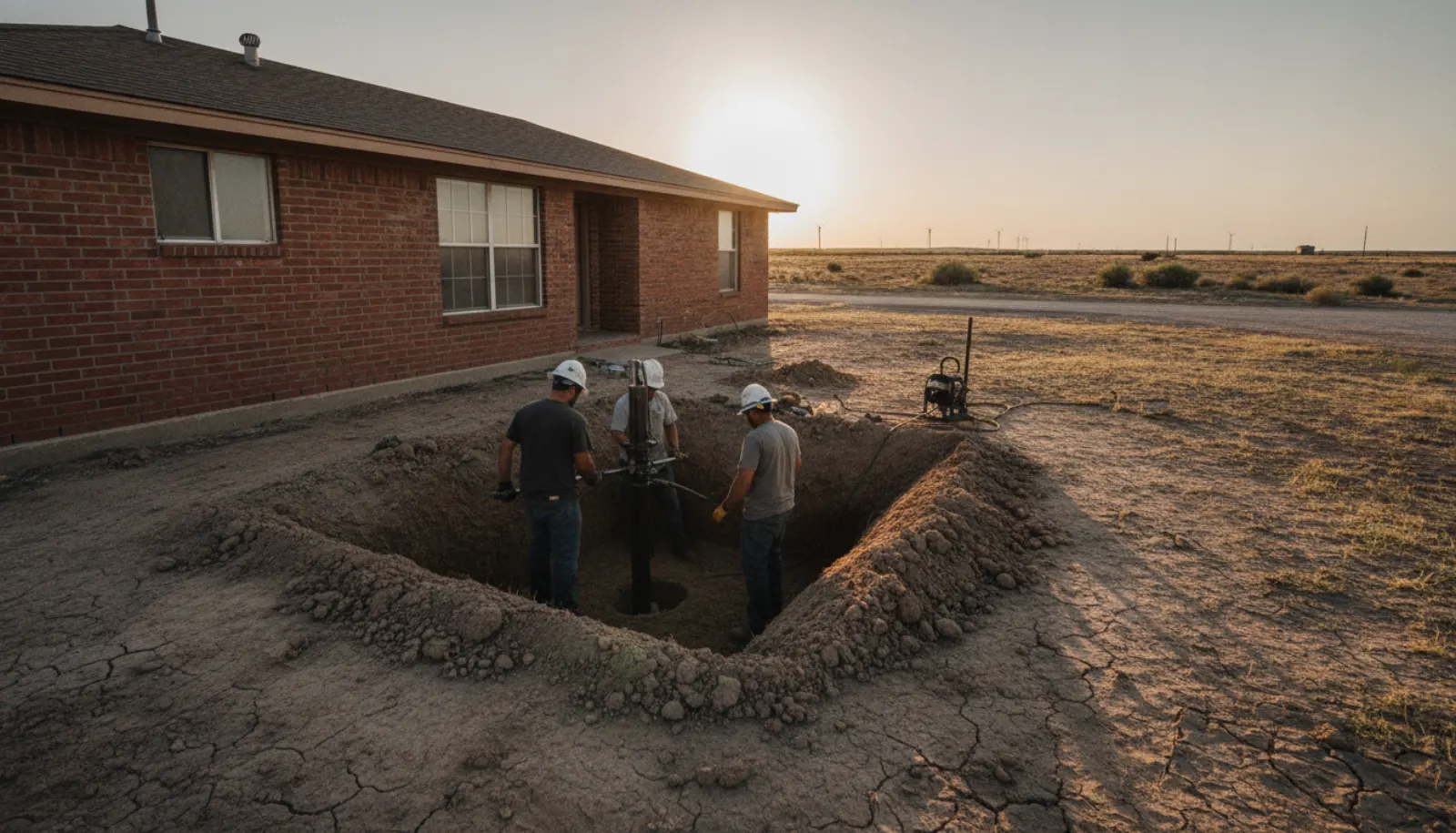
If the foundation moved, patching first is a waste of money. The usual fix is piers under the part of the house that dropped. The crew lifts that section back toward level, which often closes the crack part of the way. After that, the mortar is repointed so the wall looks right again.

If water caused it, the gutter, grading or sprinkler problem has to be fixed too. Otherwise the same corner moves again.

What it costs

These are typical ranges from published cost guides, not quotes. Small mortar repairs are cheap. The number goes up when piers are needed. Your price comes in writing after the free inspection.

Before the inspection

  1. Take photos of each crack with a coin or ruler next to it.
  2. Mark the ends with a pencil and write the date.
  3. Check again after the next big rain and the next dry spell.
  4. Walk inside the wall with the crack. Note any doors that stick or new drywall cracks.
  5. Look at the gutters and sprinklers near that corner.

Frequently asked questions

Are stair-step cracks in brick always a foundation problem?

Not always. Mortar can crack from age and heat alone. A stair-step crack is more likely to mean movement when it is wider at one end, when bricks on one side sit lower, or when doors inside near that wall also stick.

Can I just fill the crack with caulk or mortar?

You can, and it may look fine for a while. If the house is still moving, the crack usually opens again next to the patch. Fill it after you know why it cracked.

Why did my brick crack after a dry summer in Lubbock?

Clay soil under many Lubbock homes shrinks when it dries. The ground under one corner can drop a little, and stiff brick cracks before the wood frame shows anything.

Is a crack above a window or garage door serious?

A small crack at the corner of an opening is common. Watch for a crack that grows, a gap between the brick and the window frame, or a sagging line of brick over the opening. Those are worth a look.

Will lifting the foundation close the brick crack?

Lifting often closes it part of the way. The mortar joints usually still need to be repointed after, so ask if that is in the price.

Find out what your brick is telling you

Call (806) 855-8140 or send the short form. A local foundation crew will look at the brick, measure your floors, and tell you in writing if it is a mortar fix or a foundation fix. Homes across Lubbock and nearby towns are covered.

(806) 855-8140 Free inspection