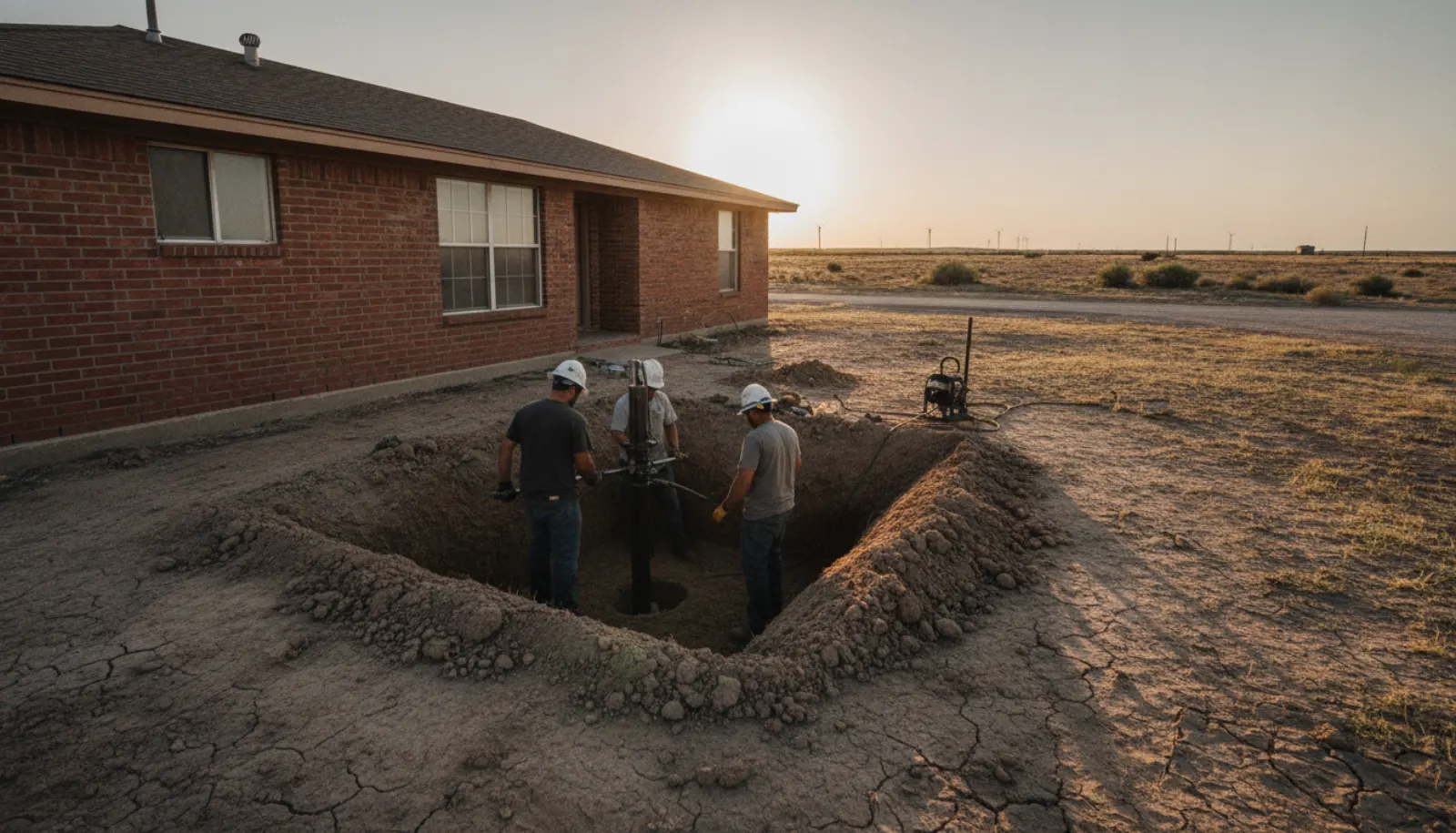
Why foundations sink in Lubbock
Clay that shrinks. USDA soil surveys show that common soils around Lubbock have a sandy or loamy top layer over a subsoil with more clay. Clay shrinks as it dries. When the soil under one corner dries out more than the rest, that corner loses support and drops.
Water in the wrong place. A corner can also sink when soil there stays soaked and soft. A gutter that dumps at one spot, a yard that slopes toward the house, a leaking sprinkler valve or a plumbing leak can all keep one area wet. Uneven water is the most common thread.
Rain in bursts. Lubbock averages about 18.6 inches of rain a year, according to the National Weather Service, and much of it falls in heavy storms after long dry stretches. The soil swings from dry to soaked and back, and a weak corner gets worse each cycle.
Low ground and filled playas. Lubbock drains to playa lakes. USDA says playa floor soil is 50 to 60 percent clay and cracks up to 40 inches deep when it dries. A 1999 Texas House bill analysis notes that filling playas during building caused flooding problems in parts of Lubbock. A house on or next to that kind of ground can sink more than its neighbors.
Caliche below. Many local soils turn into caliche, a hard layer packed with lime, roughly 2.5 to 5 feet down, according to USDA. The house usually sits on the moving clay above it. That matters for repair, because the crew has to reach firmer ground below the part that moves.