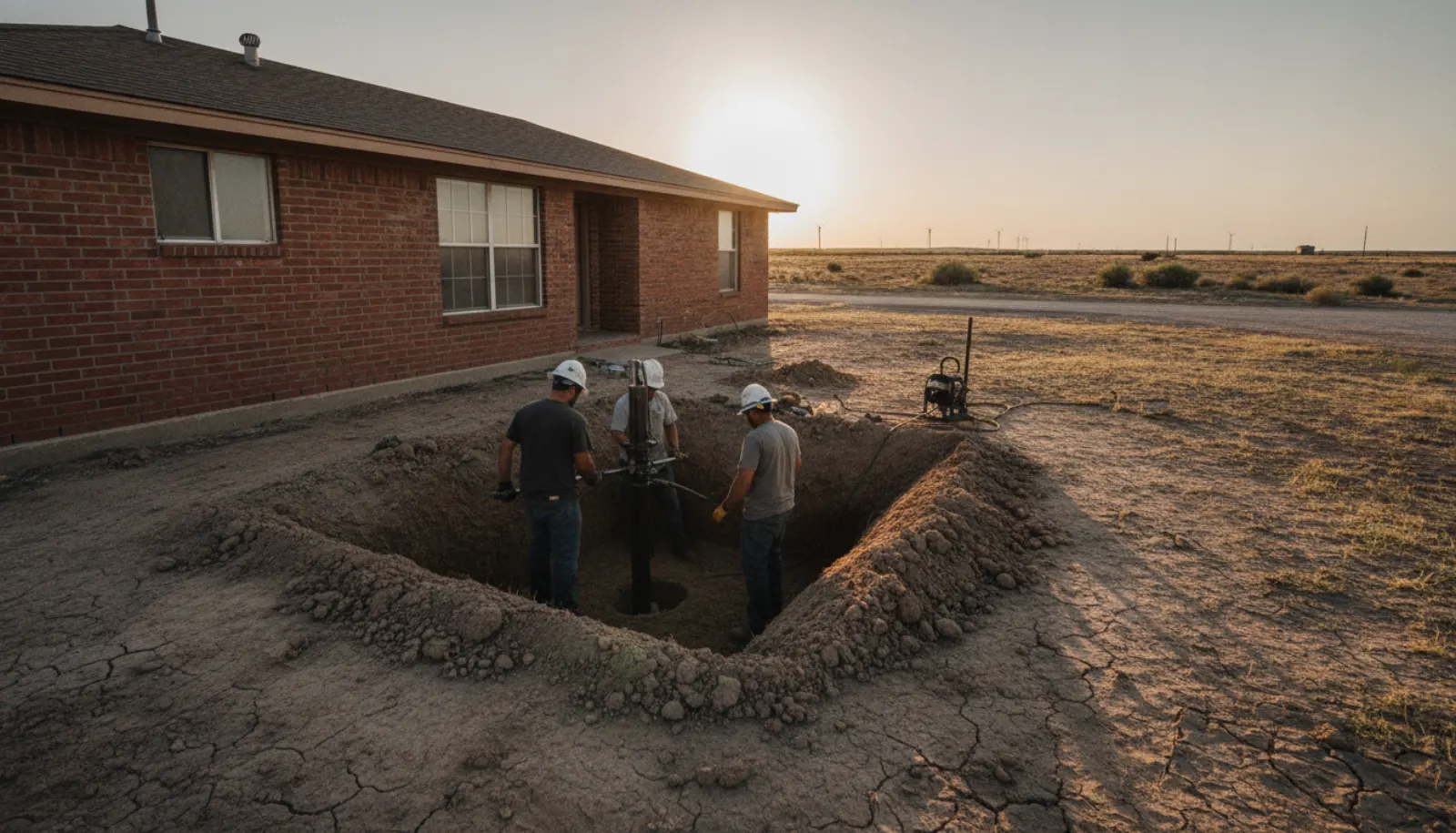
Why houses settle in Lubbock
New homes. Much of Lubbock's growth is new construction on the south and west sides. Far south Lubbock has many homes built in the last ten years or so. Wolfforth grew about 30 percent from 2020 to 2023, according to Census estimates. In the first years after a slab is poured, the soil under it firms up, and a new lawn and sprinkler system change how wet the ground is. A few small cracks in that time are common.
Clay that never quite stops. USDA soil surveys show that common soils around Lubbock have a clay subsoil. Clay swells when wet and shrinks when dry. Unlike sand, it does not settle once and stay put. A house on clay keeps riding up and down a little with the seasons. That is why an older house can show new cracks decades after it was built.
Dry years. Lubbock averages about 18.6 inches of rain a year, according to the National Weather Service. In 2011 it got only 5.86 inches, the driest year on record. In a stretch like that, the clay shrinks deep under the house, and the soil around the edge pulls away from the slab. Edges can drop while the middle stays put.
Playa ground. Lubbock drains to playa lakes. USDA says the soil on playa floors is 50 to 60 percent clay and cracks up to 40 inches deep when dry. Homes on or near low ground can settle more.